


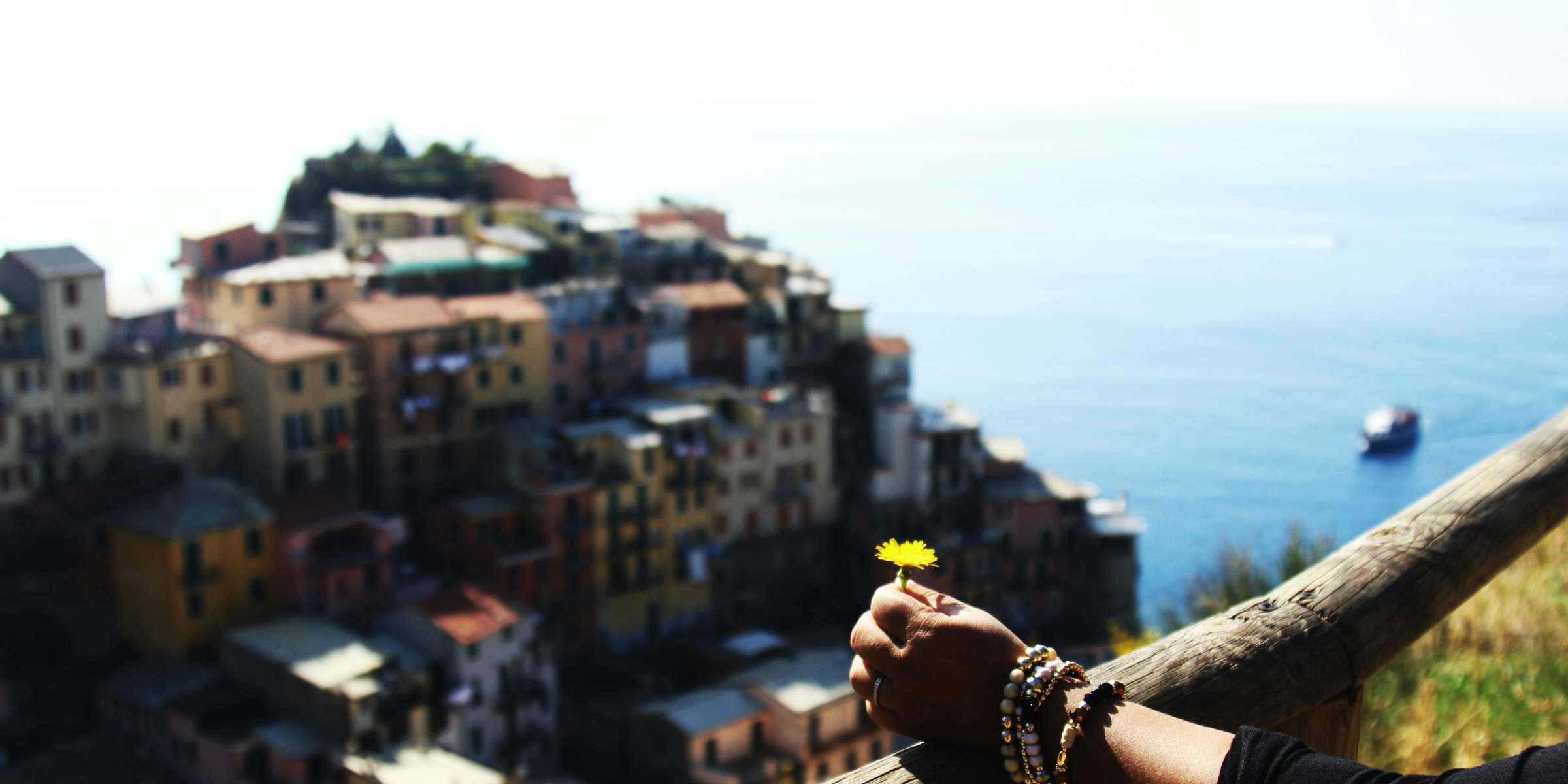
What heritage travel actually looks like, and why it's nothing like a typical vacation
My great-grandparents left Sicily in the early 1900s, like so many others, carrying almost nothing. What they left behind, they never spoke of much. A village name. A few surnames. The smell of something cooking that had no American equivalent. For years, I assumed that history was lost. Then I started researching my family's story for my dual citizenship application. After that, everything changed.
What began as a search for documents became something I hadn't expected: a journey into who my family actually was, where they lived, what they left behind, and why. I found myself reading century-old handwritten records, tracing surnames across comuni, finding distant cousins I didn't know, and feeling, for the first time, that Sicily was not just a place my ancestors came from. It was a place I could go back to, my ancestral home.
Heritage travel is not sightseeing. It is something closer to listening.It starts before you leave home. The most meaningful moments of a heritage journey are often the ones you prepare for. Before you book a single hotel, spend time reviewing whatever your family preserved: naturalization papers, old photographs, baptismal and marriage certificates, a surname that points to a region. Even approximate information, a comune, a province, a decade, is enough to work with.
Italian civil records go back to 1809 in most regions, and church records go back further still. Archives exist at the comune, diocesan, and state levels. There are also excellent Facebook genealogy groups for each region, with experts willing to fill gaps and share their knowledge. Many are skilled at navigating resources like FamilySearch and Antenati, Italy's free national digitized archive of historical civil and parish records, and at reading old, smudged documents in Latin. Francesco Curione of 007 Italian Records in Palermo has built a career on making those records accessible to families like yours. A heritage journey that includes even a single afternoon in an archive, watching a researcher pull a handwritten birth record with your family name, changes how you understand the rest of the trip.
The village is not a ruin. This is the part that surprises people most. They expect to find something faded or frozen in time. What they find instead is a living place: a bar on the piazza where the same family has served espresso for three generations, a church where Mass is still celebrated on the feast day of the patron saint your great-grandmother prayed to, a cemetery where the surnames on the headstones match the ones in your family tree. People still live there. They still cook the dishes. They still celebrate the festivals.
In many cases, especially in smaller Sicilian and southern Italian villages, residents remember emigrant families. A local guide who knows the territory, and knows how to make introductions, can turn a walk through a village into a conversation that stays with you for the rest of your life.
Timing matters more than most people realize. Italy rewards travelers who pay attention to the calendar. Arriving in a village on the feast day of its patron saint means witnessing a procession that has continued, uninterrupted, for centuries. Visiting an agriturismo in November means watching the olive harvest happen around you. Traveling in the off-season means the piazzas belong to the people who actually live there, not to summer tour groups. A well-planned heritage itinerary is built around these moments, not just around monuments.
Some travelers come home with a stack of discovered records and feel more prepared for their dual citizenship application. Some come home with a photograph taken in front of the house where their great-grandmother was born. Some come home quieter than they expected, having understood something about their family, and themselves, that no conversation at a holiday table ever quite conveyed.
If you have a village name on a scrap of paper somewhere, it is worth following. I would be glad to help you figure out where to start.